Saturday, July 14

Men Can Mend Maternal Care?

In commemoration of World Population Day on July 11, the United Nations Population Fund has called on men around the world to become partners in maternal health care.


"Experience shows that men's involvement and participation can make all the difference. By discouraging early marriage, promoting girls' education, fostering equitable relationships and supporting women's reproductive health and rights, progress is made," said Thoraya Ahmed Obaid, the Population Fund's executive director. "It is time for all men as fathers, brothers, husbands, community and religious leaders, and government officials to become partners in maternal health."

About 525,600 women die annually from pregnancy and childbirth complications. Every minute, a woman loses her life. And for every woman who dies, 20 experience serious complications such as obstetric fistula, a debilitating childbirth injury that affects more than 2 million women around the world.

Thursday, July 12

Women's action group struggles to plot future

A lack of funding has curtailed the once vocal Victoria Status of Women Action Group, but its remaining members aren't about to be silenced

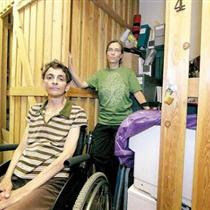
Their "office" is now a seven-by-seven-foot storage locker on Fort Street.

Their funding from federal and provincial governments to fight for women's equality totals zip.

SWAG -- the once-feisty Victoria Status of Women Action Group -- might even drop "action" from its name. It sounds too protest-prone for insurance brokers and brings up bad memories for people who associate it with mid-1990s infighting.

These are tough times for one of the oldest women's organizations in Canada.

They still have their voice mail -- thanks to a donation -- but it can take a week for call-backs, a far cry from the 25 to 50 calls it used to field in a week.

Late last year, the federal government cut funding for political advocacy on the part of federally funded Status of Women groups, and a dozen offices across Canada closed, including Victoria's. SWAG got $42,000 in its last 18 months of funding -- enough for its office on View Street and a report called An Examination of How Women Would Benefit from a Guaranteed Livable Income. Neither expenditure would qualify under recently re-instated funding guidelines.

"It's horrible that it's come to this -- that we're in a locker -- but it can also be a time for us to look at what our focus is going to be," says SWAG's former co-ordinator, Cindy L'Hirondelle, a 45-year-old mother of three grown children.

Since it was founded in 1971, SWAG has put its energies into many fronts, from monitoring court cases to lesbian rights and Take Back the Night marches. Now it's figuring out how to redefine its focus, its name and its fundraising.

Come September, women of Victoria -- SWAG members and non-members -- will be invited to ponder three questions central to its survival:
* What do you see as the problems?
* What do you want to see happen?
* What are you willing to do to see that happen?

"One thing there's not a shortage of is lots of people coming forward saying, 'You should do this and you should do that,' " says L'Hirondelle, now a member of SWAG's board of directors.

"There is no shortage of good ideas, but there is a shortage of people making a commitment to seeing those things happen."

Funding cuts are only one reason for the group's lower profile.

Forty years into feminism, do a lot of people think women are equal?

"There is that perception," acknowledges L'Hirondelle. But in her view, it's only a perception, although there's no denying more women have made it, economically, than ever before.

These days, systemic sex discrimination has given ground to poor personal choices to explain women's problems or poverty.

"A lot of women find out how difficult things are for them if they end up having a child on their own," she says.

Other feminist activists are choosing causes with more immediate rewards rather than big-picture poverty -- SWAG's recent over-riding focus -- and younger women are few and far between.

"I'm the only young one I've met," says Meschum Prey, 25, a pet-care worker who is the daughter of a board member. Prey is disappointed about that, wondering whether other young women think there's nothing left to fight for or that there's no way they can make a difference.

Susan Noakes, president of Together Against Poverty, calls the demise of SWAG due to cutbacks "a shock to the community on many levels." She notes that women, whether single parents or seniors, face consistently higher poverty rates than men, a lack of affordable child care and housing.

SWAG speaks on behalf of women "and as long as there are inequities for women there still needs to be a voice for that."

L'Hirondelle asks why there are three times more men earning more than $100,000 a year than women, and far more women than men earning less than $30,000.

"Does that sound equal to you?"

But there's no longer an office where she can help a mother of four denied income assistance and in extreme crisis.

"We were quite effective at that," L'Hirondelle recalls. When she recently checked SWAG's voice mail, there was a call about a woman kicked out of her marital home, completely oblivious to her rights.

"We need to keep going, more so now than before, I believe," says Debie O'Connell, the B.C. rep for the National Action Committee on the Status of Women as well as a SWAG board member. She won't give up, even though she's challenged by a serious neurological disease.

Another issue SWAG faces is the f-word -- feminism -- "which to a lot of people is a dirty word," says O'Connell. "Which is a shame. Because when you think about it, it really is humanism.

When you're benefiting the women of the community, you're in turn benefiting the children, which in turn benefits the community."

SWAG also went through a very public internal upheaval in the mid-'90s, when a dozen disillusioned supporters asked the province to investigate concerns about abuse of power.

Today's remaining SWAG members -- most of whom are low-income -- haven't yet begun to raise funds, a major challenge. Even an offer of support from a charitable group bit the dust because SWAG is a non-profit group, not a registered charity, and the donation would put the donor's charitable status in jeopardy.

Likely no one was happier with the original $5-million funding cut than REAL Women of Canada, the traditional-values lobby group that had deplored funding feminists for decades. At the time of the cuts, REAL vice-president Gwendolyn Landolt was quoted as saying: "If a group can't support itself and its lobbying activities across the country, then it just isn't a grassroots organization and shouldn't be funded by the taxpayer."

Conversely, the move was criticized not just by opposition parties in Parliament but by Amnesty International and the National Council of Women of Canada, established in 1893.

New federal guidelines for re-instated $5 million in funding exclude research, polling, lobbying of any level of government and full-funding for any particular project. "Deliverables" are the new currency -- for instance, giving 200 women a certain kind of training. For-profit groups are also welcome to apply.

"What the Conservative government and their supporters argue is that doing systemic advocacy is political, so fund it yourself," says L'Hirondelle. "But what if your membership is . . . about 90 per cent low-income? How much energy do you ask from people to go out and do all this free work so that we can get this organization going again?

"Especially when that means all the unpaid work cuts into your ability to do paid work."
The executive director of the Victoria Women's Sexual Assault Centre hopes SWAG will revive as a voice for women.

"The critical function that they served that is missing now in our community is really a lobbying voice for women in terms of what's happening on the policy or legal level," says Sandy McLellan, who was involved with SWAG many years ago.

"When you look at the business sector and government, women are still really under-represented in positions of power," adds Jody Paterson, outgoing executive director of Prostitutes Empowerment Education and Resource Society.

As a reporter 10 years ago, Paterson found SWAG to be on the cutting edge of women's issues. "They always had something to say. Then suddenly they disappeared . . . I'd like to see them come back to the powerhouse I remember them being."
- - -
SPEAKING FOR WOMEN
Some policies of the Victoria Status of Women Action Group
- Widest possible choices for child care -- including family members as well as non-profit day cares
- Immediate implementation of universal guaranteed livable income -- something not even the Canadian Labour Congress supports
- Pro-choice on abortion
- Support for women's right to choose their own sexuality
- Acceptance of transgendered women
- Anti-racism and pro-cultural diversity
SWAG facts
SWAG membership: About 90, down from 400 a decade ago, but up from 30 in 2001.
Membership fee: Free to $25
Phone: 383-7322
E-mail: swag@pacificcoast.net
Oda, northern ministers agree to more talks on shelter funding

Northern leaders say they're hopeful they can work towards more funding for women's shelters in the North, following talks Wednesday with the federal minister responsible for the status of women.

Bev Oda met with her provincial and territorial counterparts Tuesday and Wednesday in Iqaluit. One of the issues discussed was $56 million in funding Oda announced last month at the National Aboriginal Women's Summit for shelters and prevention programs.

But northern ministers pointed out that the funding is restricted to shelters on First Nations reserves and there are no reserves in the North, where women face higher rates of domestic violence than those living in the southern provinces.

Oda said she will see what she can do, adding that Ottawa provides other programs to support shelters and help local organizations through special projects.

"I've agreed with the territorial ministers that there are special needs, there are special circumstances and we have agreed that we will work further to look at recognizing those needs and how they can best be addressed," Oda said. "So at this point, we've agreed to do some further work."

Leona Aglukkaq, Nunavut's minister responsible for the status of women, said she has been working with Yukon Women's Directorate Minister Elaine Taylor and N.W.T. counterpart Charles Dent to form a common front on the issue. They will continue to work together to seek a deal for more support from Ottawa.


"When you look at the three northern territories — and when you look at aboriginal women who are subject to three times the national rate of spousal assault, family violence — certainly the federal government should be working in collaboration with our respective governments to address some of these dire issues," added Taylor.

A Statistics Canada survey released last year suggested 12 per cent of adults living in the three territories who had lived common law or been married at some point experienced violence at their spouses' hands between 1999 and 2004. That's compared to seven per cent in the provinces. The use of shelters is also higher in the territories than anywhere else in Canada, the survey indicated.

Breaking into trades

Only six per cent of construction workers are women and, with the Olympics coming, carpenter Kate Braid says now is the time to flood the industry

That number has grown only marginally over the years, despite B.C.'s booming construction industry, with its shortage of skilled workers and an increase in workers' salaries.

Annual earnings in trades and construction start at $50,000, climbing up to $250,000, says the BC Construction Association.

A women's studies professor at Simon Fraser University says her current research shows the proportion of women in trades and construction stands at 3.4 per cent, up from only one per cent more than 30 years ago.

LINK: Vancouver Sun

Tuesday, July 10

Fifth Continental Meeting of Indigenous Women

This year the Fifth Continental Meeting of Indigenous Women of the Americas 2007 will take place from July 9 to 11 in Kahnawake, Quebec, Canada, under the theme Restoring our Balance. By way of exchanges, training and networking, these leaders will once again have the opportunity to concretize actions in order to develop partnerships allowing them to improve their way of life. It is an opportunity for Indigenous women to strengthen links developed over the last fifteen years and get to know one strong nation in North America: the Mohawk nation and the community of Kahnawake.


LINK: The site is trilingual: French - English - Spanish 5th Continental Meeting of Indigenous Women of the Americas
LINK: Le Devoir

Sensitivity training proposed for email prankster

Michael Hurst, the Industry Canada employee at the centre of an e-mail controversy in Yellowknife, may get to keep his government job for the price of 75 hours' community service.

Hurst, a general manager with Industry Canada, is reported to have sent out 31 allegedly racist, sexist e-mails from his office. The e-mail messages are said to have depicted images of four naked women, one of whom was an older Aboriginal woman exposing her breasts. The attached message in the e-mail was "pick Miss Northwest Territories."

Two women's groups, the Status of Women Council of the NWT (SWC) and the Native Women's Association of the NWT, contacted Industry Minister Maxime Bernier requesting that Hurst be fired.

Sharon Thomas, executive director of SWC, says she has been assured Hurst will face disciplinary action, but added she was prepared to support a more positive road to reconciliation.

According to Thomas, a senior executive at Industry Canada in Edmonton has proposed Hurst perform 75 hours of community service with three women's groups in the Northwest Territories.

"Industry Canada has decided they're going to take some disciplinary action and what they're going to propose is that Michael work 75 hours of volunteer time with the three women's groups," says Thomas.

"It was proposed to me that he do a project on discrimination and my immediate thought was that this might be a good project for Michael, since he would be investigating what discrimination is all about. That sounded like a pretty okay plan, I would welcome that."

Thomas added she would want to see Hurst's volunteer work geared towards sensitivity training. "To have a man lead that [type of project] would be really good; it would be more effective."

She added: "Of course, when we [first] saw the e-mail it was just shocking. But when you see the bigger picture of who they are as a person, we don't want to make a scapegoat out of [Hurst] because it's not an isolated incident. It's a fairly common thing with the federal government, with everybody.

"I don't want him to lose a job," says Thomas. "It's a small place here - we need healing, we don't need more hurt."

While the incident is under investigation, Industry Canada is not permitted to discuss specific details under the Privacy Act, according to spokesperson Andrew Hannan.

Native leaders call for mindshift to combat violence against native women

Breaking the cycle of violence against native women will require a giant mindshift that includes rethinking approaches to the environment, language and human rights, several prominent aboriginal leaders said Tuesday.


With statistics pointing to alarming rates of sexual violence on Canada's reserves, delegates at an international conference for native women say fundamental cultural changes are needed before those numbers begin to drop.

"It's a constant struggle to have to address these issues in our community," Beverley Jacobs, president of the Native Women's Association of Canada, said as more than 250 native women from 17 countries gathered at the Kahnawake Mohawk reserve for a meeting of the Indigenous Women of the Americas.

"Women have been specific targets of violence since colonialization."

LINK: Canada East

Sunday, July 8

Women's Organizations Cut Staff in Wake of Conservative Funding Guideline Changes

Women's groups across the country continue to lay off staff, and others fear they will close their doors for good because the Harper Conservatives are quietly changing the criteria for funding, Liberal Status of Women Critic Maria Minna said today. "

As feared by many women across Canada, the anti-women ideology of the current Conservative government is forcing more women's groups to lay off staff and close their doors," said Ms. Minna.

The most recent victim of the Conservatives' anti-women agenda is the Canadian Research Institute for the Advancement of Women (CRIAW), which had to lay off three out of five staff because the organization no longer qualifies for funding from Status of Women Canada. The Conservative government made changes to the rules that prevent any group that advocates for women's equality from receiving funding. "Minister for Status of Women Bev Oda uses smoke and mirrors to try and keep from Canadians what is really happening," said Ms. Minna.

"In addition to denying funding to women's groups, 12 of 16 Status of Women's regional offices have been closed, a move that particularly isolates women in rural areas." Time is running out for many other organizations. For example, the National Association of Women and the Law (NAWL) and the Feminist Alliance for International Action (FAFIA) are deeply concerned for the future well-being of their organizations. Ms. Minna said this story is becoming far too common among women's groups.

"The Conservative government is trying to silence the voices of Canadian women when there is so much work still to do to for them to reach true social, political, economic, cultural, and legal equality in Canada," she said.

Ont. to establish regulatory body for child-care workers

Queen's Park is investing $12 million to create the country's first regulatory College of Early Childhood Educators to ensure kids in daycare get high-quality care from well-trained professionals, Children's Minister Mary Anne Chambers said yesterday.

Just 40 per cent of Ontario child-care workers hold college or university degrees in early childhood education, a situation that is putting child-care quality at risk, a recent provincial study found.

It recommended the province immediately invest in training and wages so that within eight years, all child-care workers have some post-secondary education in the field.

"The whole concept of the college is to raise the bar on quality," Chambers told reporters at Toronto's Rawlinson Child Care Centre. "This is going to be really good for early childhood education."

The province passed legislation to enact the regulatory college last month and Chambers said a provincially appointed "transitional council" will set it up and prepare members to elect their first governing council by the end of 2008.

In addition to maintaining high standards in early childhood education, the college will set professional qualifications, ongoing professional development requirements, standards of practice and ethics, and establish a public complaints process.

"This is an important milestone for the early childhood education field," said Eduarda Sousa, executive director of the Association of Early Childhood Educators of Ontario, which has been lobbying for a regulatory college for 20 years.

"It formally recognizes trained early childhood educators as the professionals that they are," she said, adding that too many people confuse child care with babysitting.

Most of the new money for the college will help existing workers earn childhood education diplomas through grants for tuition and travel and living costs. Money will also be available to waive college registration costs for the first year.

Cash for the college was part of a larger child-care spending plan for $142.5 million in previously announced federal and provincial funds. Almost $106 million will sustain 7,374 newly created daycare spaces, including 300 spots for aboriginal kids living off-reserve.

About $25 million will help boost wages by about 3 per cent for about 33,500 of the province's lowest-paid child-care workers whose salaries average about $23,000.

Toronto's share of the money – about $32.2 million – will help daycares pay increased rent and utility costs, raise wages and sustain 926 new spaces created this year.

Child-care advocates welcomed the new spending but said when barely 20 per cent of Ontario children have access to licensed daycare, much more is needed.

LINK: Toronto Star

Call for proposals

The Women's Community Fund of the Women's Program, Status of WomenCanada, has $12.3 million available to eligible Canadian organizations to support projects addressing the economic, social and cultural situation ofwomen at the local, regional and national level.

DEADLINE FOR PROPOSALS IS JULY 23, 2007

LINK: CNW

Tighten rules on MD suspensions: women's group

Medical regulators in two provinces fumbled the ball while dealing with a psychiatrist who was suspended after he acknowledged having sex with one of his patients, a women's group says.

Leslie MacLeod (pictured), president of Newfoundland and Labrador's Advisory Council on the Status of Women, said "We need to have protocols between the different jurisdictions to ensure that — as in the old days, with the priests moving from one diocese to another — we don't witness physicians simply packing up and moving to another jurisdiction and practising with impunity."

LINK: CBC

Thursday, June 28

Hollaback at leering

Winter coats are off, it's hotter than Hades, you're wearing as little as possible. Then ...... the unwanted leering, catcalling.... what to do?


Post the experience on HollabackCanada - a place for Canadian women to post photos of and shame their harassers.

Or read a recent article in the Toronto Star- where the question"When does looking become a leer?" is explored.


York University sociologist Rhonda Lenton: "There definitely has been a change in what type of behaviours are encompassed within definitions of sexual harassment."

Lenton says it also depends on context – a 14-year-old in an isolated location is likely to feel more threatened by a male stranger's attention than a thirty something on a restaurant patio.

"Quite a few young women would almost feel offended if they were out in the evening and feeling positive about themselves and nobody noticed," says Lenton, dean of the Atkinson Faculty of Liberal and Professional Studies at York.

And yet, her paper, Sexual Harassment in Public Places, found nine in 10 Canadian women reported at least one incident of public harassment – defined as "unwanted attention" of any kind, including "being stared at in a way that made you feel uncomfortable."